
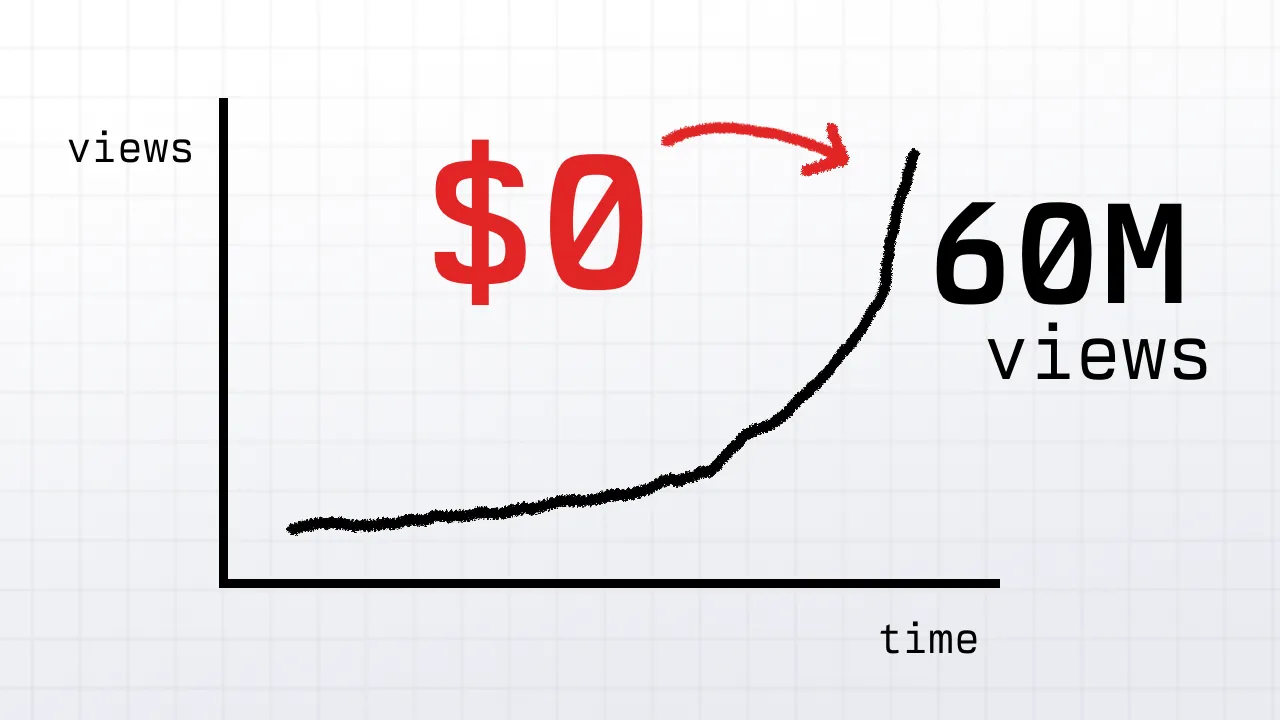
I Got 60 Million Views from Short Form Videos and Made $0.
Before I started doing what I do now, I ran a separate sports channel. Over a couple of years I made 200+ short form videos and racked up around 60 million views across YouTube, Instagram, and TikTok.
We had videos go viral almost every week, and by every visible metric things were working.
But I made no money and I didn’t convert many followers. If you asked most of the people who watched those videos what my name was, they probably couldn’t tell you.
The algorithm kept telling me I was winning while I was building the wrong thing.
To understand how I ended up there, you have to know what I was trying to build.
The Vision
Sports content is one of the most competitive spaces on the internet. Everyone and their mother has a sports podcast now. Every athlete has one too.
You have the news breakers who get scoops and you have the reaction guys who yell about whatever happened that day. It’s crowded and loud.
Creators like Johnny Harris and Vox and Cleo Abram were doing something different, making documentary-style explainers with real production value. I thought I could bring that energy to sports and cover interesting topics and history and stories that most people hadn’t heard before.
Every video had some educational component rather than just reacting to the news.
The production quality was good. The editing was tight, we had animation in there when most sports content didn’t, and the scripts were solid. I was proud of most of it.
The Dopamine Loop
When you start making short form content and something hits, it feels incredible. You watch the view count climb from 10,000 to 100,000 to a million.
You learn to read the analytics. Where people drop off in the first three seconds, who makes it to ten, who stays to the end. You study hooks and retention and swipe rates. You build a swipe file of what works and start recognizing patterns.
My most-watched video hit over 10 million views, and the retention graph tells you exactly why. At the 10-second mark, retention was at 101%. That number shouldn’t be possible on paper, but it happens when people watch the video multiple times in a single session.
They’d watch it, scroll down to the comments, and the video would keep looping in the background. Or they’d share it and come back to watch again. By the end of the video, retention was still above 60%, which is unheard of for a short.
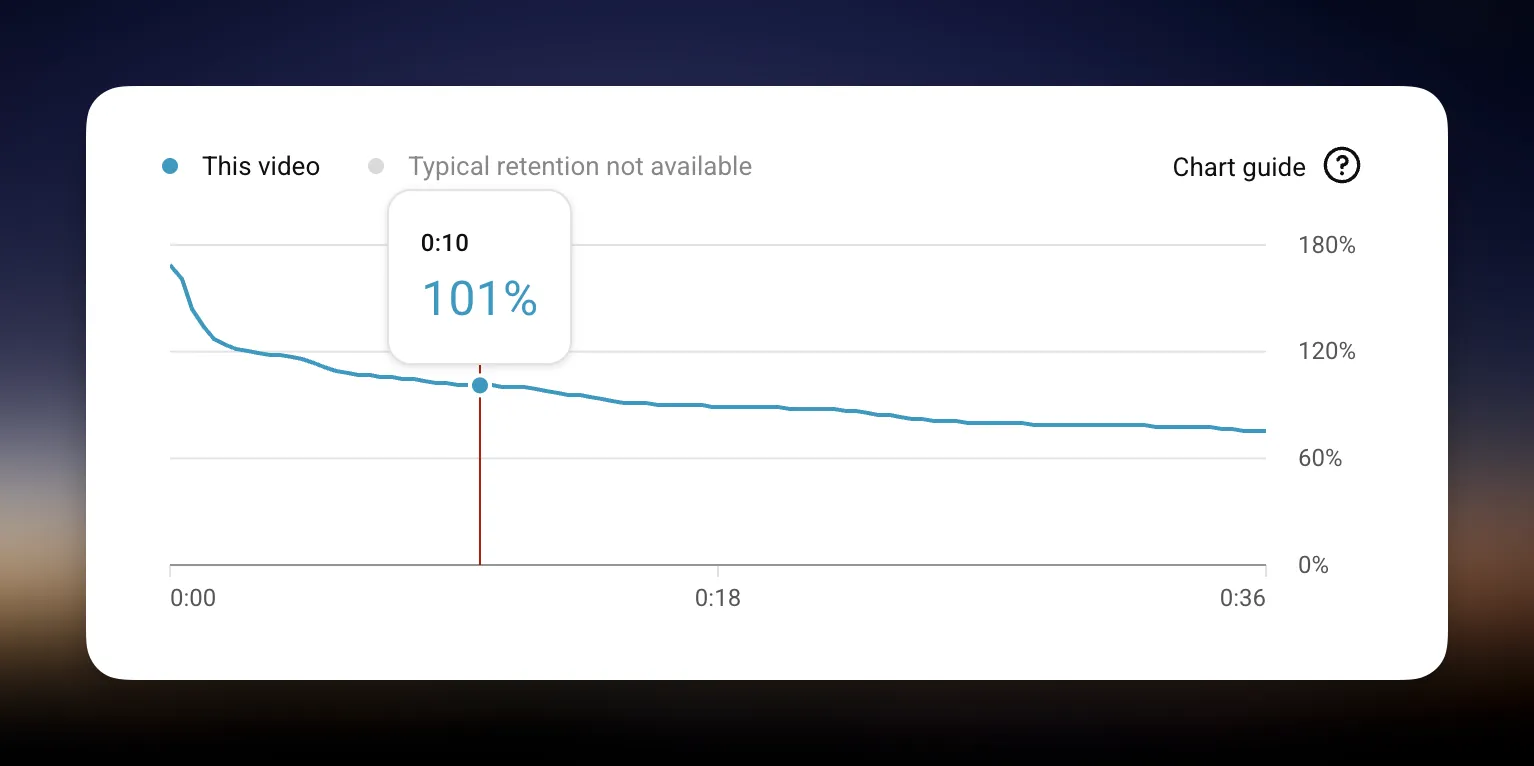
Retention graph from the 10M+ view video. 101% at 10 seconds means viewers are watching on repeat, looping while reading comments or rewatching after sharing.
That kind of retention creates a flywheel. The algorithm sees that people are watching all the way through and watching again, so it pushes the video to more people. More loops, more views.
A video can rack up 10 million views when most of those are the same people coming back and watching it again.
I was doing all of this. Posting every day, analyzing everything, applying what I learned. The numbers kept going up.
When a video didn’t pop on YouTube that week, maybe it would go viral on Instagram instead or on TikTok. Something was working somewhere almost all the time.
It felt like progress because I was learning real skills. Getting better at hooks and pacing and understanding what the algorithm wanted. Each viral video was a dopamine hit that confirmed I was on the right track.
Short form gives you feedback so fast that you don’t have time to question whether you’re building the right thing. You’re too busy celebrating the win or diagnosing the loss. The loop keeps spinning.
The Algorithm Takes Over
Over time, the algorithm started deciding what kind of videos I made.
The videos that went viral were almost never the thoughtful documentary-style explainers I set out to create. They were the provocative ones, the controversial ones, the ones with mass appeal and people fighting in the comments. The ones that were, honestly, a little stupid.
Because those videos performed, I made more of them. Not consciously at first.
But when you see that a certain kind of video gets 4 million views and another kind gets 40,000, you start tilting toward the 4 million. And gradually you become a different kind of creator than you set out to be.
The metrics tell you you’re doing well. But you might be building the wrong skill set. I was getting really good at making viral clips and not getting any better at making the content I actually cared about.
I was learning a ton. I just wasn’t learning the things that would have mattered more.
Warning Signs I Ignored
It’s not like I couldn’t see what was happening. I noticed every one of these problems in real time. But I kept asking “how do I get the numbers back up?” instead of asking whether the numbers were measuring the right thing.
The most obvious one was follower conversion. Videos would get millions of views but the follower count barely moved. The relationship between views and follows was completely broken.
Look at the numbers. 11.1 million views converted 8,600 subscribers. That’s a 0.08% conversion rate.
6.7 million views brought in 6,100. 4.8 million got 4,300. 2.9 million got 2,500. Even smaller videos that still did well, 300K and 150K views, only converted a few hundred people each.
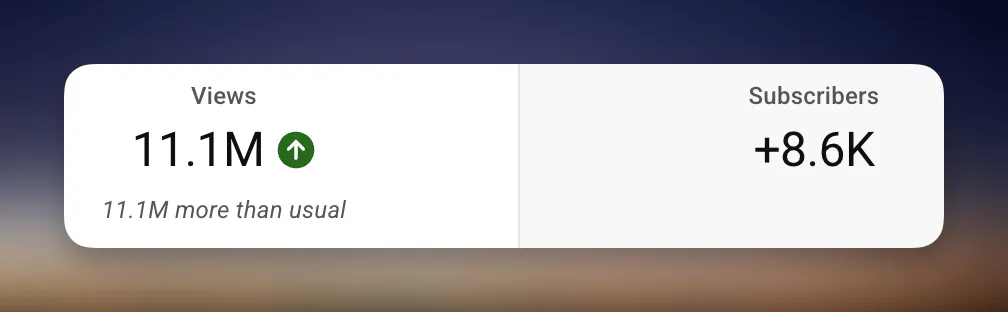
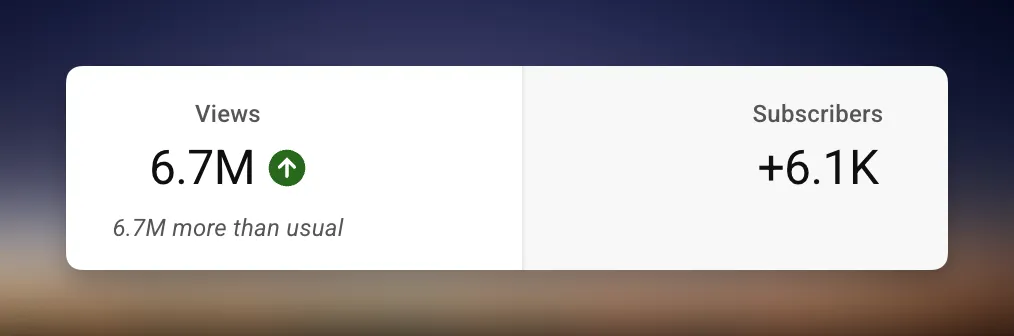
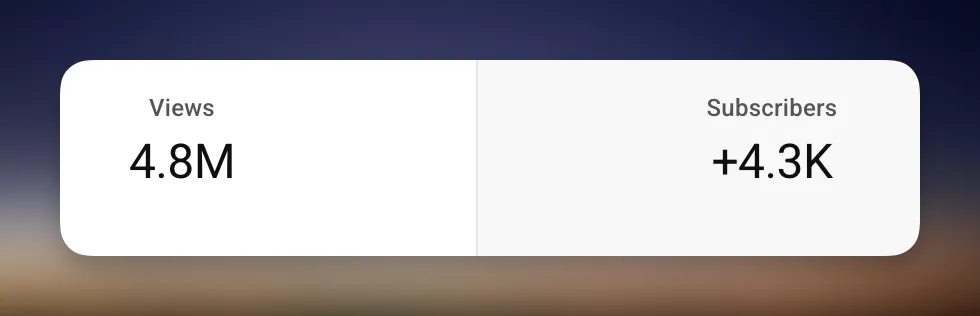
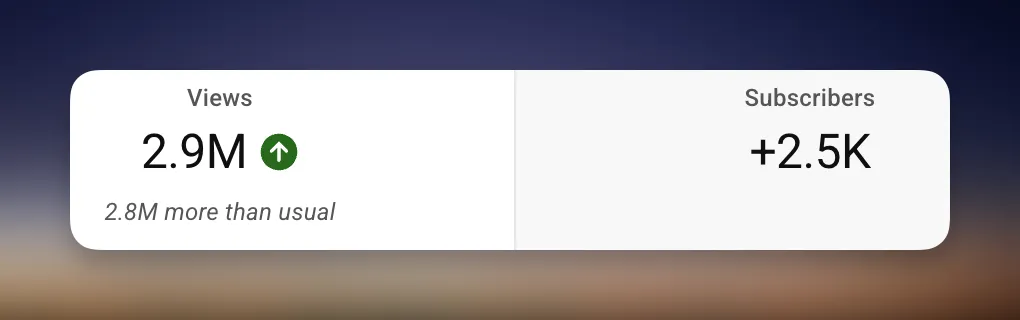
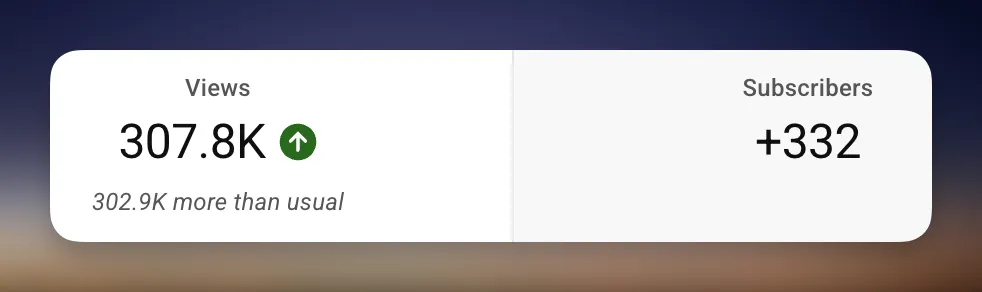
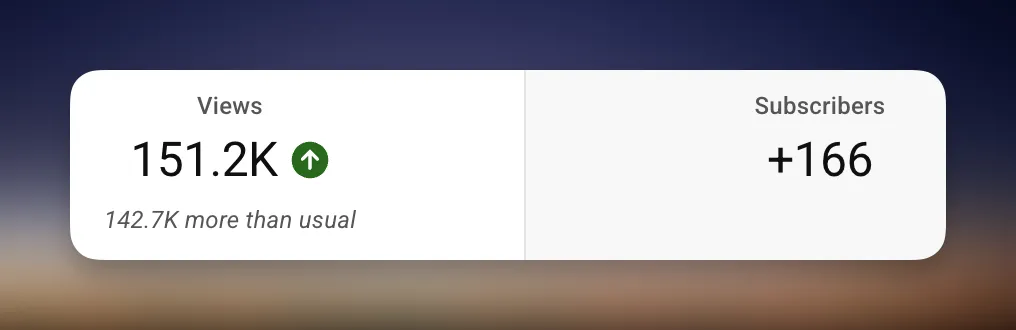
Views vs. subscribers across six different videos. These were the best performers on the channel.
Part of that is on me. I wasn’t good enough at converting. But it’s also structural.
Someone who subscribes after a 30-second video they liked doesn’t care about you or your channel. They liked that one clip. They’re not going to watch the next thing you post, and they’re not going to buy anything from you.
In most niches, subscribers from short form are a vanity metric. The number looks nice and it feels good to watch it climb, but you can’t activate those people. They won’t open your emails and they won’t click your links.
But the bigger problem wasn’t subscribers. After tens of millions of views, most people who watched couldn’t even remember my name. They watched for 30 seconds and moved on with their lives.
And then there was the money. The best-case scenario was a video that got over 10 million views across its lifetime. Here’s what that earned.
Best case: 10M+ views
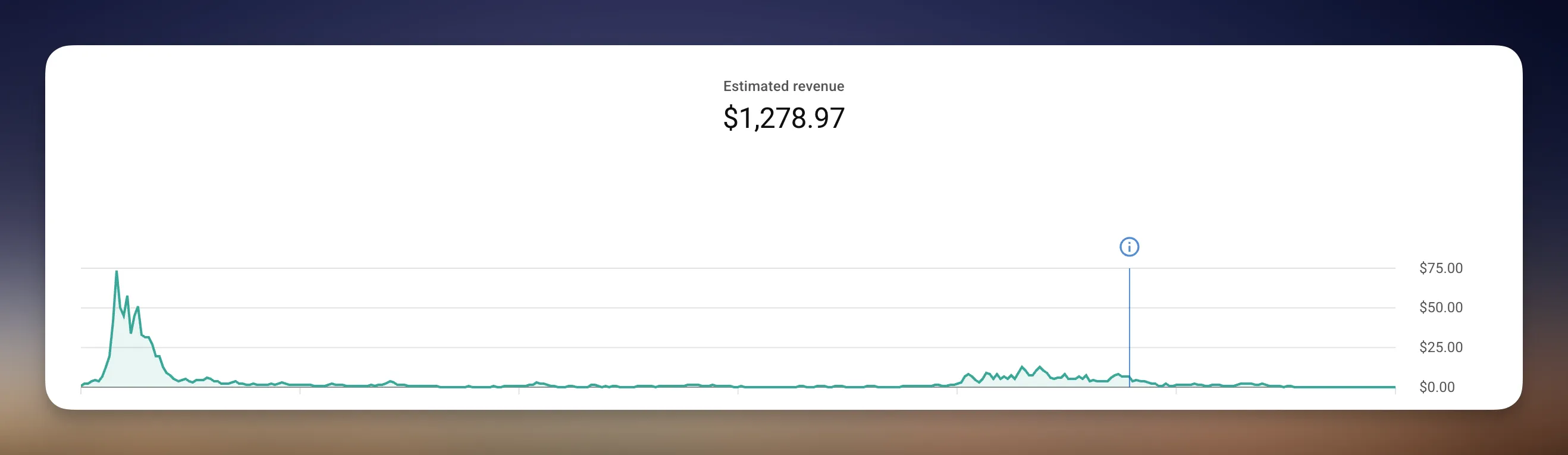
$1,278.97 from a video with 10M+ views. This was the best it ever got. Most videos made $0.
$1,279 from 10 million views. Before paying editors, before the time on ideation and scripting and reviewing cuts. When you factor in the actual costs of running the channel, I lost money.
Each of these should have made me pause and reconsider. But the views would dip and I’d go into fix-it mode. Just need a better hook formula. Just need to nail down posting times. Just need to tweak the editing style. Then they’d recover and I’d feel fine again. Every dip felt like a tactical problem with a tactical fix, and every recovery felt like proof the fix worked.
The moment things actually clicked was when the views went quiet for a few weeks and I didn’t immediately jump into problem-solving mode. For whatever reason I just sat with it. And when I finally asked myself what I was actually building, I didn’t love the answer.
What I Actually Learned
I still use most of what I learned. Views matter. Whether you’re building a YouTube channel, a newsletter, a consumer brand, or a consulting practice, you need people to pay attention. The fundamentals of hooks and pacing transfer to almost everything. Long form, short form, writing, social media. A good hook is a good hook regardless of format.
I was building real skills. I just didn’t have a strategy underneath them.
These are the tactical things that actually worked, with the caveat that getting good at this stuff can be its own kind of trap.
1. The first frame and the first three seconds matter more than anything else.
Everyone talks about hooks, but the first frame of the video is equally important. Most people are doom scrolling after a long day of work, just trying to turn their brain off. You have to stop the scroll.
YouTube shows you a metric called “How viewers engaged” that breaks down what percentage of people stayed to watch versus swiped away. If people are swiping away before your video even gets going, the platform has no reason to push it.
Across every video that did well on the channel, the stayed-to-watch ratio was above 70%. The ones that really took off were above 80%.
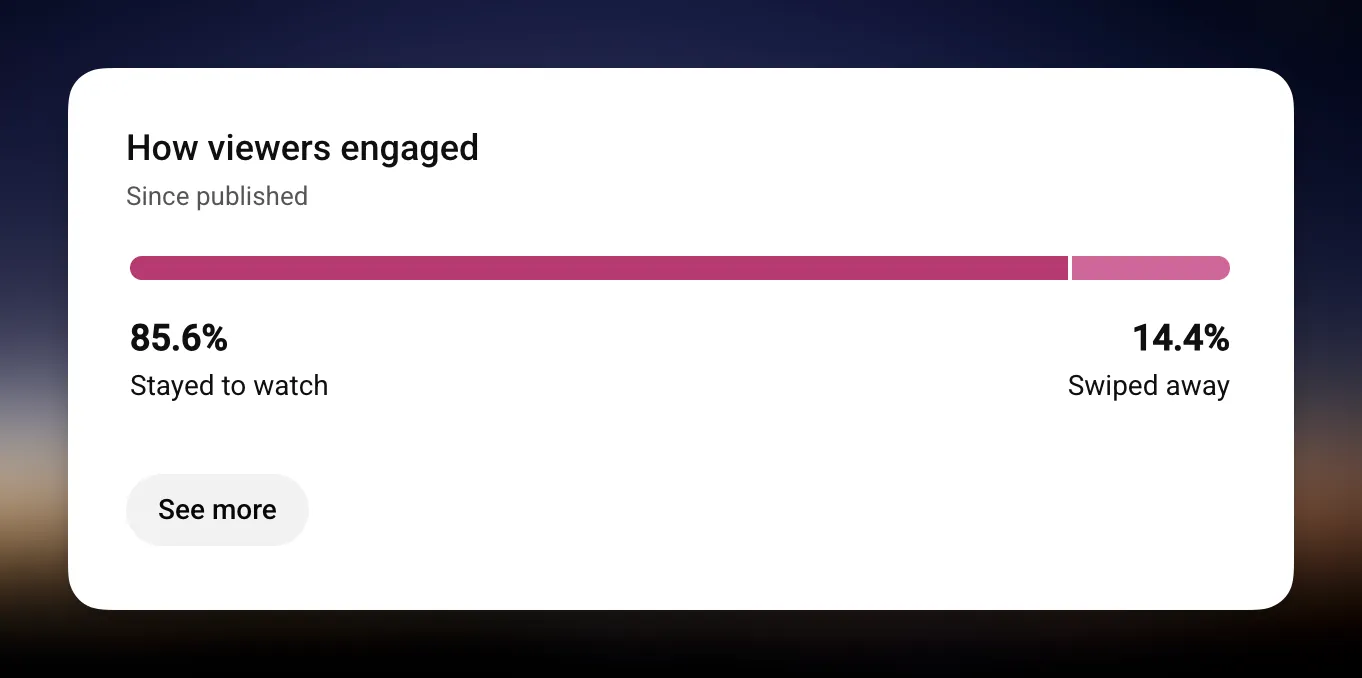
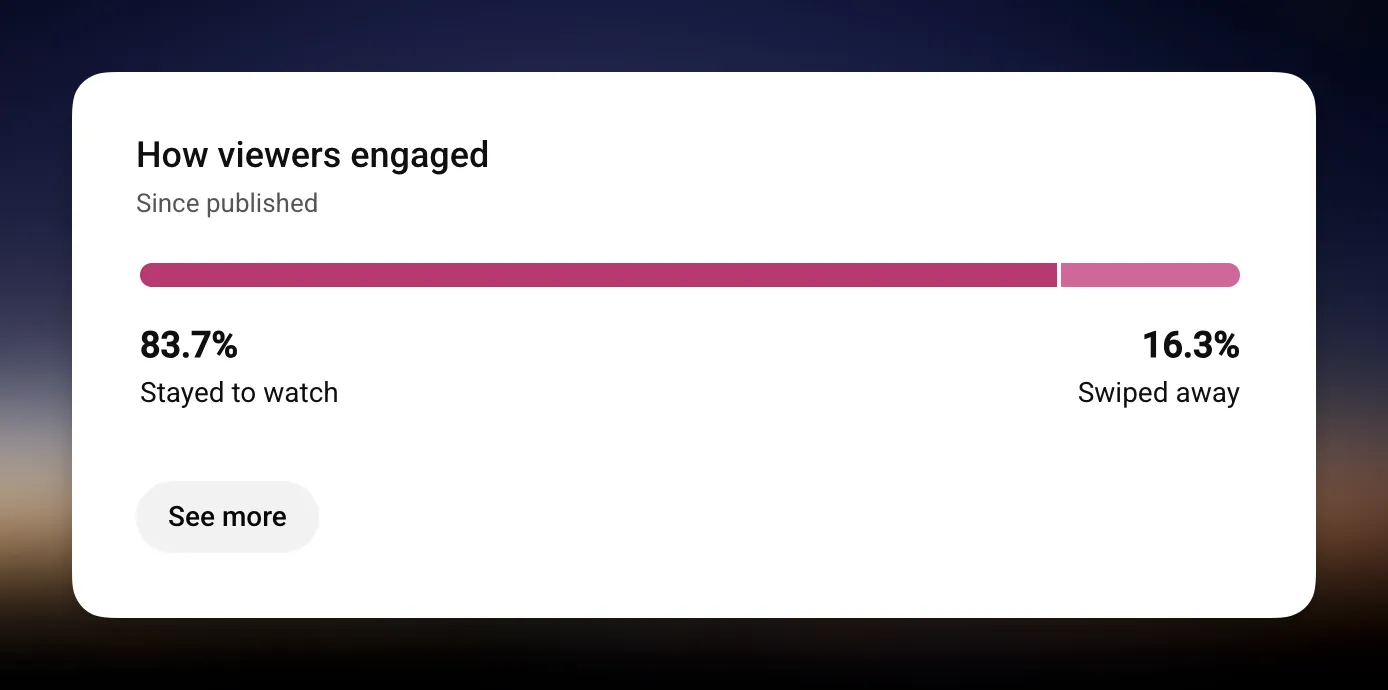
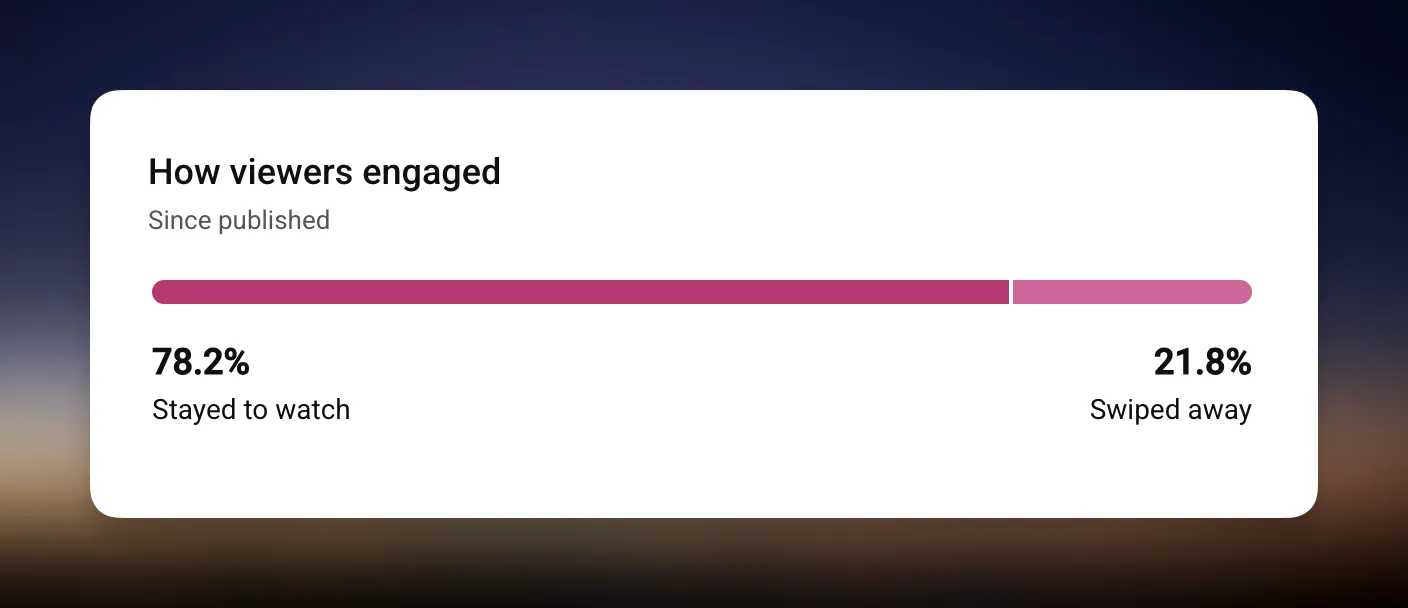
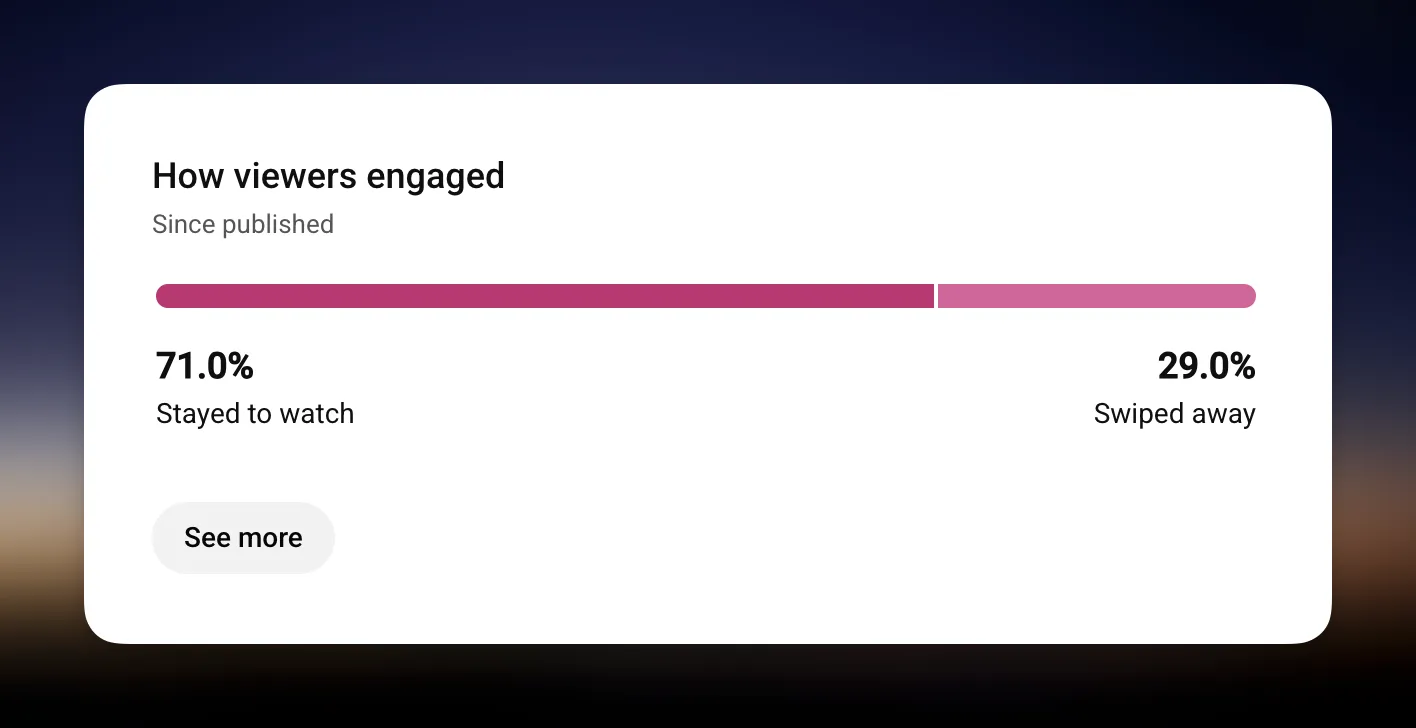
"How viewers engaged" stats from four different videos that did millions of views. The stayed-to-watch ratio ranged from 71% to 85%. These aren't even exceptional numbers, but they were enough.
This metric is almost entirely determined by the first frame and the first three seconds. If your first frame doesn’t stop the scroll and the first three seconds don’t give someone a reason to stay, they’re gone. Doesn’t matter how good the rest of the video is.
If you think your first frame is attention-grabbing, it probably isn’t, because you’re competing with millions of other videos that also have good first frames.
2. Ideation matters more than execution.
When videos tanked, it was usually because we cut corners on the idea. We had a system that worked, and when we followed it the videos performed. When we rushed to push something out without doing the work to find a genuinely interesting idea, it flopped.
A mediocre hook with a great idea will outperform a great hook with a mediocre idea. Where you find your ideas, and whether you’re finding ideas that other people aren’t, is the most important part of the whole process.
3. Platforms are different.
I remember one video where I was confident it would go viral on YouTube and probably flop on Instagram and TikTok. The opposite happened, and it got 3 million views on Instagram and something like 30,000 on YouTube.
This kind of result wasn’t a one-time thing. Each platform has its own culture and algorithm, and what works on one doesn’t necessarily translate.
The upside is that you can be everywhere at once if you repurpose, and sometimes you’ll be surprised by which platform picks up which video.
4. For me, shorter performed better.
I looked at my analytics and my best performing videos (anything over 200,000 views) were all fairly short. I gave myself a rough 35-second rule.
This isn’t universal. Johnny Harris makes long shorts that do great. But for sports content, attention spans seem especially short.
Part of this is probably that I need to get better at storytelling. Part of it is just knowing your niche and not being dumb about what works for your specific audience.
5. It feels random, and that’s kind of the point.
You’ll have videos you think will crush that flop and videos you think will flop that crush. Analyze at a surface level, make a guess about why something worked or didn’t, and move on. If you spend too much time hyper-analyzing, you’ll waste months trying to recreate something that was partially luck.
All of those lessons are real, and I don’t regret learning them. But they’re the wrong lessons if you’re trying to build something that lasts.
What I’d Do Differently
If I were starting over, I would make long form content from day one.
I know that sounds counterintuitive. Short form is easier to start with because you can get reps in faster and learn quicker and potentially go viral with less effort. That’s exactly why I did it.
But the skills I should have been building were different. Talking to camera. Writing long form scripts. Doing interviews. Meeting interesting people. Traveling to tell stories. The kind of stuff that would have made me a sports journalist with a real show and a real audience.
That path would have been slower. Way slower. I might not have gotten anywhere near 60 million views.
But each person who did watch would have remembered my name, and I would have been building something that could turn into a career.
Long form would have also forced me to confront a problem I kept avoiding. I didn’t have a real audience.
I watch the NFL (specifically the Eagles), the NBA, tennis, cricket, and baseball here and there. Every sports fan has their own weird combination, and almost no two look the same. That specific combination barely exists as a real audience.
I should have seen this earlier. Every successful sports media property figures this out. ESPN has First Take, which is mostly football in football season and basketball in basketball season. They don’t try to cover everything for everyone, even with their resources. That principle has held across every era of sports media, from talk radio to cable to YouTube.
Making content across all of those sports meant I was never going deep enough on any one of them to build a real following. Short form let me get away with it because a 30-second clip doesn’t require depth. Long form wouldn’t have. You can’t sustain a 15-minute video on a topic you’re only casually interested in, and your audience can tell.
I should have picked one niche, gone deep, and expanded from there. The same energy and rigor I put into short form, applied to long form in one specific area, probably would have gotten me much further even if the view counts looked smaller.
Smaller numbers, but real ones.
Where It Stands Now
The channel is still there. I’m not really running it anymore, but maybe I’ll come back to it someday as a passion project. I love sports and I love making sports content.
For now I’m focused on other things. And I’m glad I learned what I learned, even if a lot of it was learning what not to do.
Zoom out occasionally and ask whether the thing you’re getting good at is the thing you actually want to be good at.
I spent two years getting really good at making viral clips. If I’d spent those two years getting good at making documentaries, I’d probably have fewer total views and a lot more to show for them. Skill issue, I know. But at least now I know which skill.