
I read YouTube CEO’s annual letter last week and it kind of messed with me.
What he’s describing is going to change how people watch and read everything online. And it made me look at what I’ve been making and go, okay, some of this might not work in a year or two.
I’m going to focus most of my attention on YouTube here. That’s because YouTube is getting more tightly integrated with Gemini, and it’s the best example.
For the most part, this transcends YouTube. The ideas and concepts I’m thinking about apply to pretty much any piece of content on any platform, for any brand or business. Even if you don’t make YouTube videos or your company doesn’t care so much about YouTube, I still think it’s worth thinking about.
What YouTube Is Building
You might have seen this button under certain videos that says “Ask.” It’s powered by Gemini, so you can ask questions about the video and it gives you the answer with the timestamp.
Like if you’re watching a tennis tutorial, you could type “what grip did he say for a slice serve” and it just tells you.
20 million people used this in December alone.
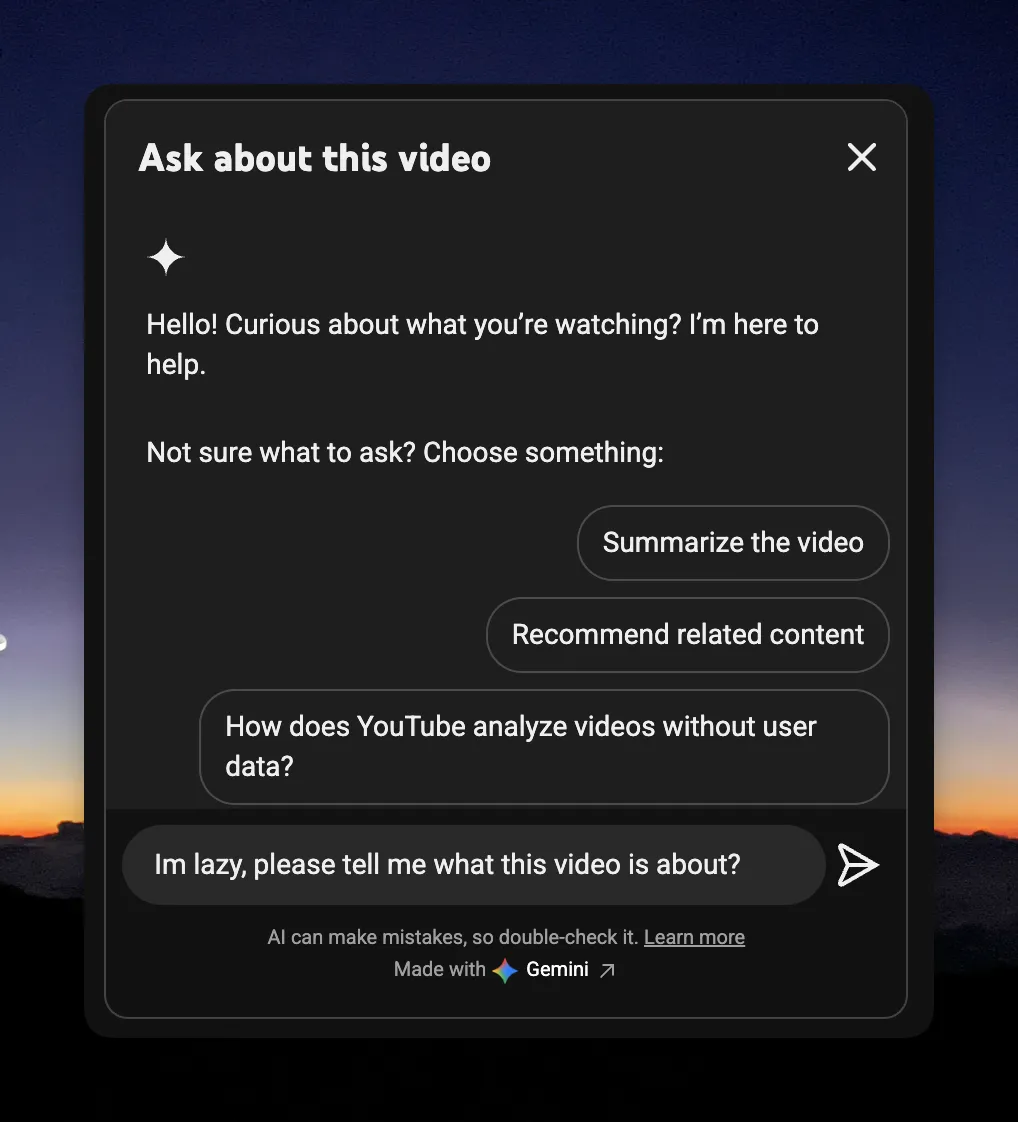
YouTube's "Ask about this video" feature, powered by Gemini. 20 million people used this in December alone.
And that’s just one thing. They’re also rolling out AI search carousels, AI summaries, and the ability to tell YouTube what kinds of videos you want on your homepage.
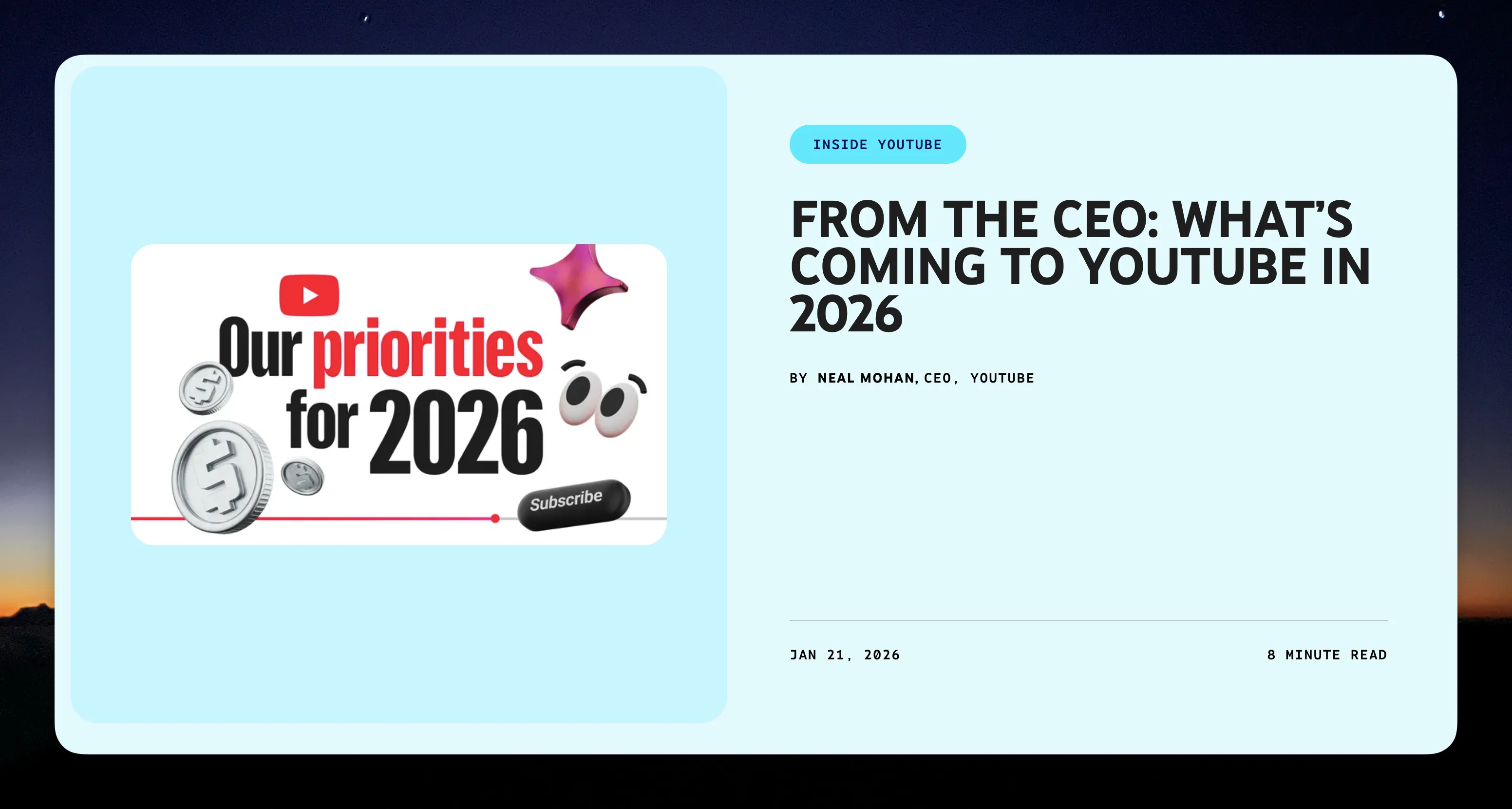
Over a million channels are already using YouTube’s AI tools every single day. And in the letter, Mohan basically said AI is going to touch every part of the platform. This is not a small experiment.
I’m already doing this. There are videos where I would have sat through the whole thing, maybe put it on over lunch. And now I just hit Ask, get what I need, and leave in a minute.
I already knew most of the information anyway. I just needed the one thing confirmed.
And once you start doing that, you don’t really go back. It’s like when you start skipping intros on Netflix. You can’t unlearn that behavior.
Mohan even said it in the letter. He wrote that “AI will act as a bridge between curiosity and understanding.”
YouTube is telling you they want viewers asking questions about the video, not just sitting there watching it. They gave examples like people asking “what’s the story behind this song’s lyrics” or “what ingredients do I need for this recipe.”
Those are questions that used to require watching the whole video.
The Middle Problem
That’s where I think it gets tricky for a specific type of video.
The 10-to-30-minute educational video. Most of these are effectively just a listicle in some format.
We used to have videos where it was like, “Here are seven things you need to do to fix your landing page.” Generally speaking, those videos don’t do well anymore, but we’re not stopping. We’re just repackaging them.
We’re not using those titles. It’s packaged as something else. We have this nice intro, and we do clips in between. But most of these videos are still the same listicles we’ve been doing for 10 years.
If most of the 10-to-30-minute talking-head educational videos are just a list, and they’re informational, why would someone sit through 20 minutes of it?
Especially if those same people are already somewhat educated. They probably know most of the stuff in the videos except for a few things. They’re watching it to hear it again for another time.
If I can just tell you that answer, why would they watch it?
Think about what happened with blog posts. Google started pulling the answer right into the search results with their AI summaries. You didn’t even need to click the article anymore. Traffic to a lot of those list-style posts just collapsed.
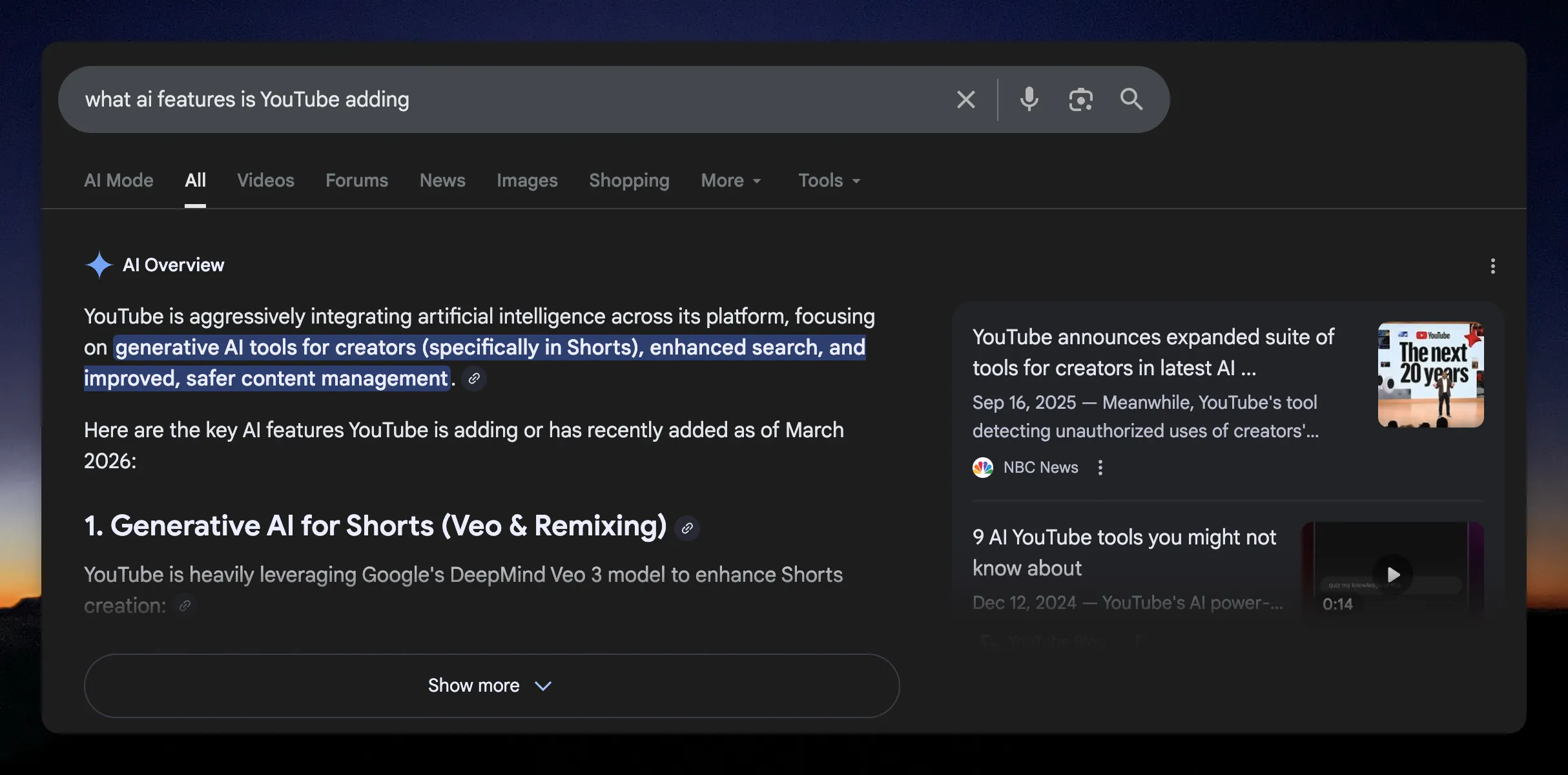
Google's AI Overview pulling the answer directly into search results. You don't even need to click the article anymore.
I think we’re about to see something similar with video. The ones that are basically articles read out loud over stock footage. Those are the ones I’d be most worried about.
And look, YouTube isn’t going to do anything that kills the creator economy. They’ve paid out over $100 billion to creators in the last four years. Their ecosystem supported almost 500,000 full-time jobs in the U.S. alone.
But they are going to keep making the viewer experience faster.
And that’s going to squeeze creators who are relying purely on information as the thing that keeps people watching.
What Still Works
But then there are videos where I don’t use the Ask button at all.
Colin and Samir post an hour-long podcast and I’m watching the whole thing because I like them.
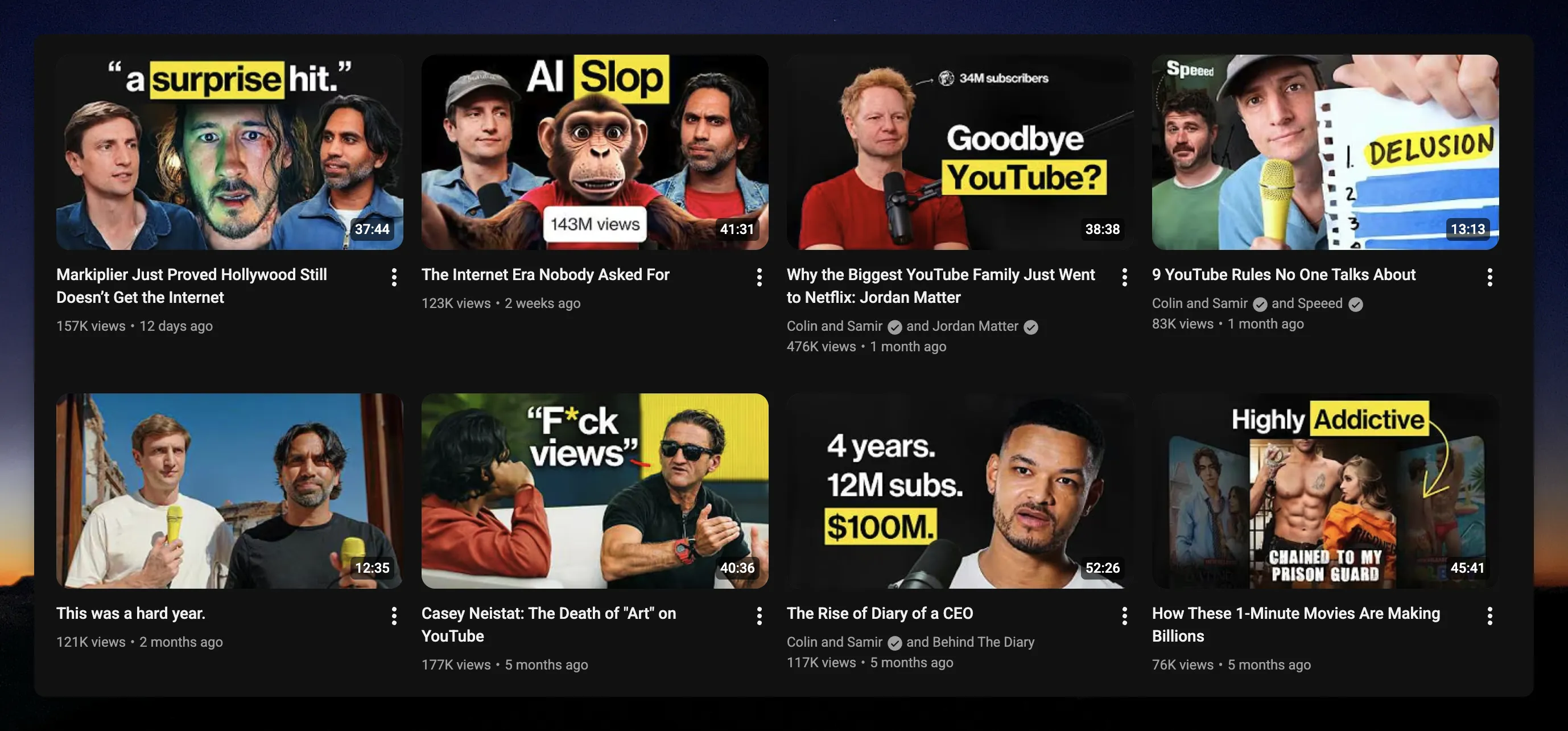
Colin and Samir's channel. Long-form conversations about the creator economy. You watch for them.
Hormozi posts something I’ve already heard before and I still watch it because I want to hear him say it.
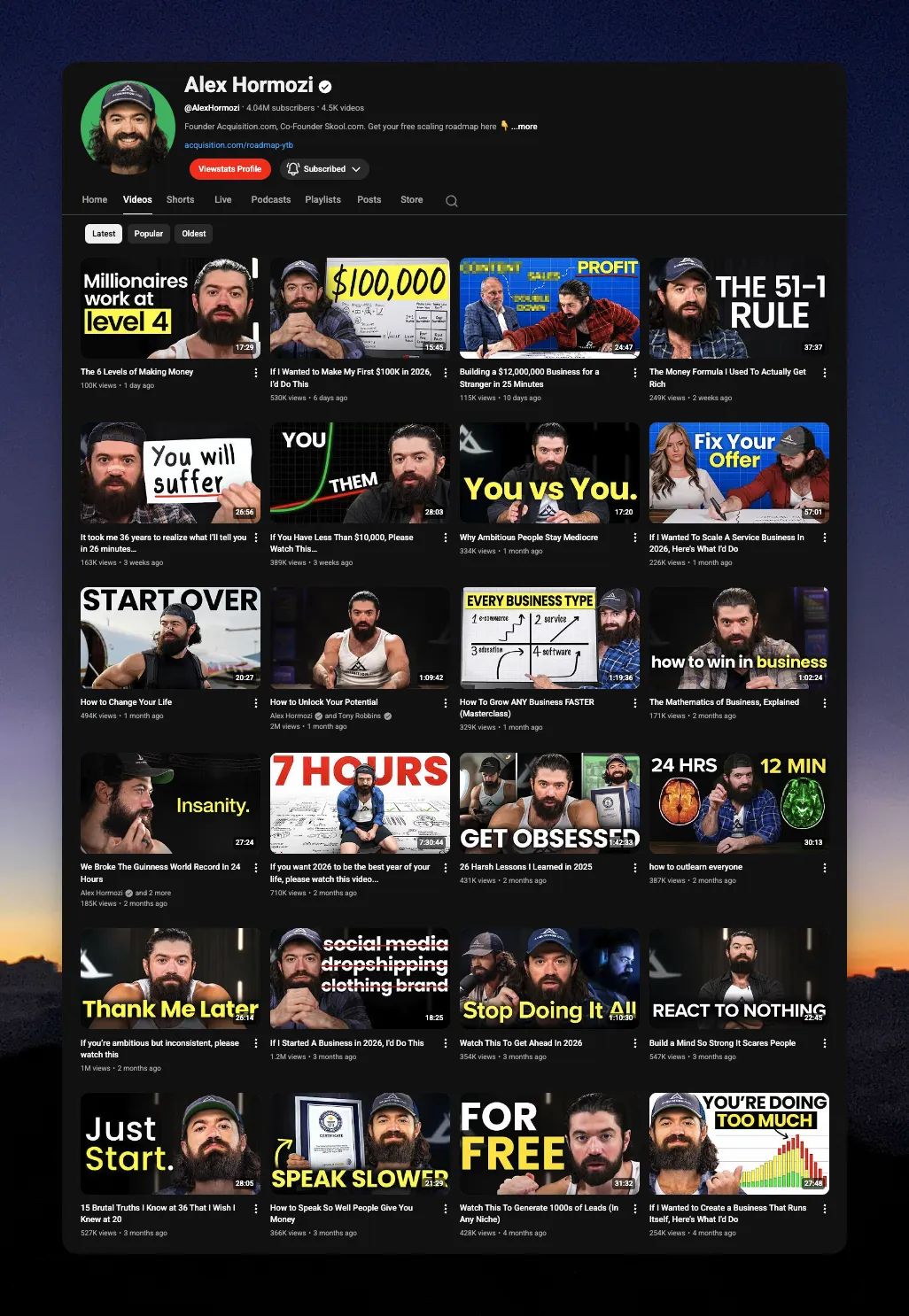
Hormozi's channel. You already know what he's going to say. You still watch.
There are certain creators where I already know what they’re going to say and I still want to watch them say it.
I’m watching for them, not for the information.
And then there’s the really short, really dense video. Five minutes, maybe less. You get in, you learn something specific, you get out.
Those still work because honestly the effort to ask AI and read the response is roughly the same as just watching a tight five-minute video.
So I think there’s going to be this weird split.
Short, dense videos that respect people’s time. Long videos where you genuinely like the creator. And then this middle of 10 to 30 minute explainers that are mostly lists, where I think watch time is just going to slowly get eaten.
Not because the content is bad. But because people don’t need to sit through the content anymore.
Beyond YouTube
This isn’t just a YouTube thing either.
This is going to hit newsletters, podcasts, courses. Anything where the value is purely the information and the way it’s delivered doesn’t add anything on top of that.
Mohan said in the letter that “the era of dismissing this content as simply UGC is long over. These are shows, built by creators who green-light themselves.”
YouTube is pushing creators toward making stuff that people actually want to sit through. And if your content doesn’t have that, like a personality or a perspective or something that makes it worth watching even when the answer is available somewhere else faster, it’s just going to get harder.
I’ve been thinking about my own stuff through this lens. When I sit down to make something now, I’m asking myself, could someone just ask AI this exact question and get a clean answer in 30 seconds?
And if the answer is yes and I don’t have a good reason why they should watch me talk about it for 15 minutes instead, I probably need to rethink what I’m making.